


ClaimHunt: Class Action Claims
4.868.00 Reviews
App Specs
- Version
- 1.5
- Updated On
- License
- Free
- Downloads
- 10,000+
- Developer
- Push apps
- Categories
- Finance
- Platform
- Android
Screenshots

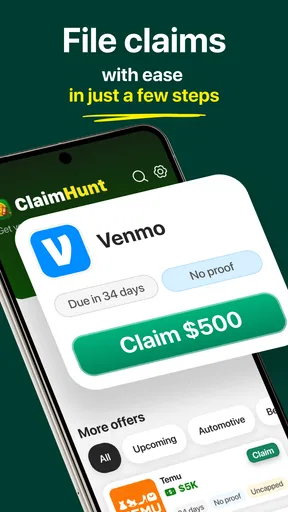
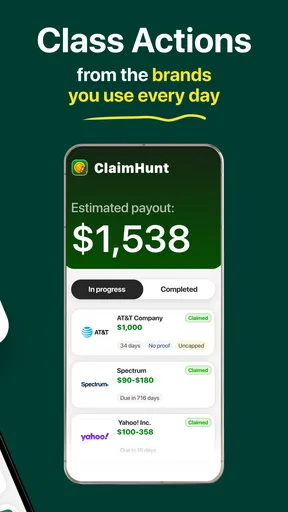
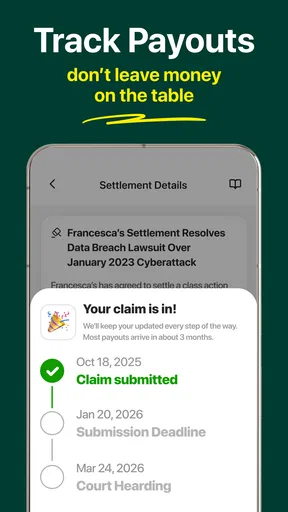
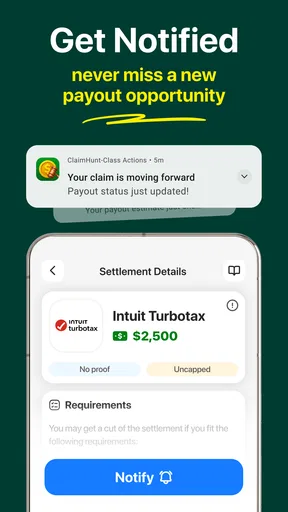

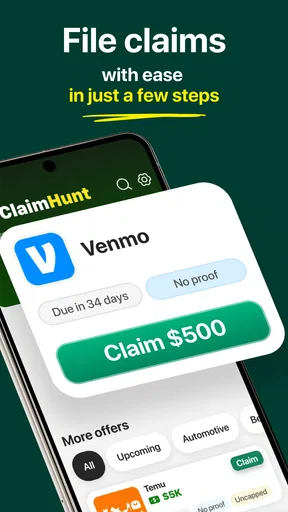
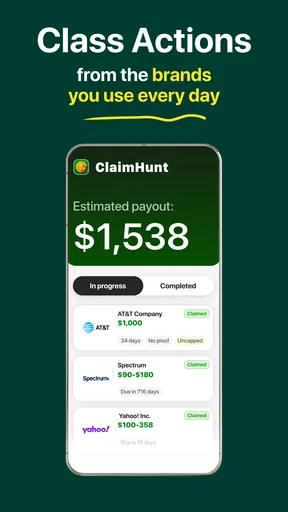
 Analysis by AppCompare
I tried ClaimHunt while thinking less about “free money” and more about the practical problem it is meant to solve: remembering which settlements, refunds, or consumer claims might apply to people in the same household. The app comes from Push apps and sits in the finance category, with a simple purpose that can be surprisingly useful when several people share purchases, subscriptions, devices, or an email inbox. My first impression was that it works best as a discovery and tracking tool, not as a promise that every search will lead to a payout.
ClaimHunt is free to install, rated for Everyone, and available on Android devices running version 7.0 or later. Its current version is 1.5. The app has reached over ten thousand installs and holds a 4.8 average from around one thousand ratings, which suggests that many users find the basic idea worthwhile. There are also optional in-app purchases ranging from $6.99 to $39.99 per item, so I would pay attention to any purchase screen and decide whether the free experience already covers what I need.
How ClaimHunt fits into a shared household
The most convincing use case for me is a household where responsibility is spread across several people. One person may handle phone bills, another may buy household products online, and someone else may manage streaming subscriptions or old accounts. When a settlement notice arrives, it is easy to assume that somebody else will deal with it. Months later, nobody remembers whether a claim was filed, whether a refund was received, or which purchase details were needed.
ClaimHunt gives that scattered task a single place to begin. Rather than relying on one person to search the web whenever a news story appears, I could use the app during a regular financial check-in. A partner might mention a product bought years ago, while another household member remembers a subscription or service that was canceled after a billing dispute. Those small clues can be enough to decide whether a settlement deserves closer attention.
That does not mean every household member should use the same account or hand over every financial detail. I see the app as a shared reference point, not as a replacement for personal account boundaries. If a claim belongs to one adult, that person should review the eligibility wording and submit the information themselves. The app can help the household remember an opportunity, but the person with the relevant purchase history remains responsible for checking the facts.
A realistic example would be a family cleaning up its finances on a Sunday afternoon. One adult reviews recurring charges, another checks old receipts, and a teenager remembers a device or service used under the family’s account. ClaimHunt can sit alongside that conversation as a way to look for relevant settlements and track what still needs attention. The useful result is not just finding a possible claim; it is preventing the same opportunity from being investigated repeatedly by different people.
What I would do before searching
I would begin with a short list of products, services, subscriptions, and retailers connected to the household. I would not start by entering every detail I can remember. A focused list makes it easier to distinguish a genuine lead from a vague result that only sounds familiar. I would also note who made the purchase, approximately when it happened, and where proof might be found.
Worth Reading Before You Choose

EA SPORTS FC Mobile 26 Is a Bigger Football Game, but It Takes Time

Flipboard Shows What News Apps Must Do Beyond the Feed

Switching to Android Auto Means Rethinking Your Driving Routine

Google Calendar Makes a Crowded Week Easier to Manage

Ludo King Makes the Most of the Minutes Between Plans

Baby Panda World Brings Quick Play to Modern Phones, but Its Game Library Feels Busy
This preparation matters because settlement language can be broad. A familiar company name does not automatically mean that every customer qualifies. The relevant question may depend on a particular product, transaction, billing practice, or time period. ClaimHunt can help surface possibilities, but I would treat each result as a prompt for verification rather than as an automatic approval.
One of the less obvious benefits is that this workflow turns memory into a practical filter. Instead of searching randomly whenever I hear about a payout, I can compare a result with the household’s own records. That reduces the temptation to spend time on claims that have no connection to anything we actually bought or used.
Keeping personal and shared information separate
Shared-device use needs a little discipline. If ClaimHunt is installed on a tablet used by several people, I would avoid leaving sensitive notes visible when another person is browsing. A household tablet can be convenient for a joint review, but it is not automatically a private workspace. I would also make it clear whose claim is being considered before entering any information.
This is especially important when adults share a device with children. The Everyone rating makes the app suitable from an age-classification perspective, but that should not be confused with giving a child responsibility for financial claims. A younger family member might help identify a brand or remember a purchase, yet an adult should handle eligibility decisions, personal details, and submission steps.
I would also avoid treating a shared login, if one is used by the household, as proof that everyone has equal authority over every claim. The app may help coordinate a task, but ownership still belongs to the person connected to the purchase or account. That distinction is easy to overlook when a family uses one phone or one tablet for practical errands.
Tracking claims without creating household confusion
The tracking side is where I think ClaimHunt can become more useful than a one-time search. Finding a possible settlement is only the first step. A household still needs to know whether somebody reviewed it, whether supporting information was located, and whether the matter is finished. Without that simple coordination, two people may do the same work while another claim is forgotten.
I would use a straightforward household routine: one person discovers a possible opportunity, the relevant purchaser checks it, and the household marks the task as either worth pursuing or not relevant. That division keeps the app from becoming a general dumping ground for every financial thought. It also makes the next action clear instead of leaving a vague reminder that nobody owns.
A useful tip is to separate “needs checking” from “ready to claim” in your own notes or routine. A result that looks promising still needs a connection to the right product, date, or transaction. Only after that check would I consider it ready for the formal claim process. This two-stage approach is more reliable than assuming that appearing in a search means the household has already qualified.
I would also schedule a review rather than checking constantly. Settlement opportunities are easy to turn into background noise if I open the app every day without a clear purpose. A monthly or quarterly household finance session makes more sense for most people. During that session, I could review new possibilities, close old tasks, and remove anything that no longer deserves attention.
That approach highlights an important trade-off. ClaimHunt may save time compared with manually searching across websites and news articles, but it does not eliminate the need for judgment. The app can organize the hunt; it cannot make a household’s records accurate, decide who owns a purchase, or guarantee that a claim will be accepted.
Where it differs from usual alternatives
The usual alternative is a mixture of browser searches, email alerts, saved bookmarks, spreadsheets, and memory. Those methods can work, especially for someone who follows consumer news closely, but they are fragmented. A spreadsheet may record a deadline while a bookmark contains the eligibility page, and neither may remind the person who actually made the purchase.
ClaimHunt is more appealing when the main problem is discovery and follow-through in one place. I would choose it over a personal spreadsheet if I wanted a lighter way to notice possible settlements without designing my own tracking system. On the other hand, a spreadsheet is better for a household that needs detailed ownership fields, document links, reimbursement splits, or a full audit trail. The app should not be forced to replace a system that already handles those needs well.
It is also different from relying on a lawyer, consumer organization, or official settlement administrator. Those sources may be more appropriate when a claim is complicated, disputed, or financially important. ClaimHunt is convenient for finding and organizing possibilities, but convenience is not the same as legal advice. If the wording is confusing or the potential consequences matter, I would read the official instructions carefully and seek qualified help instead of making a decision based only on an app summary.
Another trade-off concerns paid items. Since the app is free but offers in-app purchases priced from $6.99 to $39.99 per item, I would not assume that every useful action is included at no cost. I would first test the basic workflow, understand what the purchase unlocks, and compare that benefit with simply using a browser and a household note. For occasional users, paying may not be worthwhile; for someone who regularly tracks many opportunities, the calculation could be different.
Trust, age, and who should be in charge
The Everyone rating makes ClaimHunt easy to consider for a household device, but adults should still define the boundaries. A child can participate in a conversation about a product or service, especially if they remember using it, but I would not ask a child to interpret eligibility language or decide whether to submit a claim. Those tasks involve judgment and personal information that belong with a responsible adult.
Teenagers may have a legitimate role in the process when they manage their own purchases or subscriptions. Even then, I would treat the app as a shared planning tool rather than a reason to inspect every account. A healthy arrangement is to ask whether a person wants help checking a possible claim, not to assume that a shared device gives everyone permission to review their financial activity.
Trust also matters between adults. If one person handles the search, they should tell the other person why a result may apply and what information is needed. I would avoid submitting anything on someone else’s behalf without their review. That small pause prevents an innocent household shortcut from becoming an inaccurate claim or an argument about who authorized it.
Privacy-minded users should think about the environment in which they use the app. A personal phone is easier to keep separate from household browsing than a shared tablet. If several people use one device, I would close the app after a session and avoid leaving claim-related details on screen. These are ordinary precautions, but they matter more when financial tasks are mixed with family use.
Limits I noticed in the everyday workflow
The app’s central promise is attractive, but the process still depends on information that may be old, incomplete, or difficult to find. Households often change email addresses, replace phones, lose receipts, or forget which person made a purchase. ClaimHunt cannot repair those records. If the underlying history is unclear, the app may lead to a promising search that ends with too little evidence to continue.
I also would not use it as a reason to chase every possible payout. The time spent reading eligibility rules, locating records, and completing forms can outweigh a small expected benefit. My rule would be to prioritize claims connected to clear purchases and simple documentation. If a result requires extensive investigation for an uncertain outcome, I would put it aside rather than letting it consume the household’s financial time.
The presence of optional purchases adds another point of friction. A free app is easy to try, but users should understand the value of any paid item before confirming it. I would be especially careful on a shared device, where a child or guest could misunderstand a purchase screen. Keeping payment responsibility with the household account owner is a sensible boundary.
Finally, an app that helps locate settlements is not a substitute for checking the final destination of a claim. I would confirm that instructions, deadlines, and submission details make sense before proceeding. If a result directs me toward information that feels inconsistent or asks for more than seems necessary, I would stop and verify it through an appropriate official source.
Who will get the most from it
ClaimHunt is a good fit for people who frequently hear about refunds or settlements but rarely remember to investigate them. It is also useful for couples, roommates, or relatives who share responsibility for household purchases and need a simple way to coordinate. The app is particularly practical when the goal is to create a repeatable review habit rather than chase one isolated opportunity.
I would recommend trying it if you want a dedicated starting point and are comfortable checking each result carefully. The free entry point lowers the risk of testing the workflow, while the current version gives users a clear reason to see whether the app fits their routine before considering optional purchases.
I would skip it if you already maintain a detailed claims system, dislike reviewing consumer paperwork, or expect automatic qualification and guaranteed payouts. It is also not my first choice for a complicated legal issue, a high-value dispute, or a situation where several people need formal documentation of every action. In those cases, a carefully managed spreadsheet, an official administrator, or professional advice may be more suitable.
My household verdict
After looking at ClaimHunt through the lens of shared use, I see its strongest role as a household reminder and coordination layer. It helps turn scattered memories into a list of possible actions, then encourages people to decide who should verify and pursue each one. That is more useful than the short idea of simply “finding money,” because the real challenge is often remembering, checking, and finishing.
My advice is to start with a small household review, keep each person’s claim ownership clear, and treat every result as something to verify. Do not give children control of financial decisions just because the app is rated for Everyone, and do not pay for an optional item until its value is clear to the person managing the household budget.
Overall, I think ClaimHunt is worth trying for organized, realistic users who want a focused alternative to scattered web searches and forgotten bookmarks. Its best result is not a guaranteed payout; it is a cleaner process for noticing opportunities, deciding whether they genuinely apply, and making sure one person knows what happens next.
Pros
- Simple claim-filing process with guided steps
- Helps users discover eligible class action settlements
- Centralizes claim deadlines and settlement details
- Useful reminders can reduce the risk of missing deadlines
- No need to search multiple settlement websites manually
Cons
- Eligibility varies
- so not every listed settlement will apply
- Payout amounts are often uncertain and may be modest
- Claims may require personal and purchase-related information
- Some settlements can take months or years to distribute payments
- Availability and settlement listings may differ by location
FAQs for ClaimHunt: Class Action Claims
What is ClaimHunt: Class Action Claims, and how does it work?
ClaimHunt: Class Action Claims is an app designed to help users discover class action settlements and check whether they may qualify to submit a claim. After creating a profile, you can browse available cases, review eligibility requirements, see important deadlines, and follow instructions for filing. The app is primarily an information and claim-discovery tool; it does not guarantee eligibility, payment, or acceptance of any submitted claim.
Is ClaimHunt free to download and use?
ClaimHunt can generally be downloaded without an upfront charge, although users should review the current store listing and the app’s terms for the latest pricing information. Some services may involve optional features, administrative arrangements, or conditions connected with particular claims. Before submitting personal details or agreeing to any service, read the privacy policy, fee disclosures, and claim-specific terms carefully so you understand whether any cost or deduction could apply.
Can ClaimHunt guarantee that I will receive money from a settlement?
No. ClaimHunt cannot guarantee that you qualify for a settlement or that your claim will be approved and paid. Eligibility depends on the official settlement rules, the information you provide, supporting documentation, submission deadlines, and review by the settlement administrator or court-appointed process. Settlement funds can also vary, and payments may be reduced when many eligible people submit valid claims or when administrative costs apply.
What personal information does ClaimHunt require, and is it safe to use?
The information requested may vary depending on the case, but a claim can require details such as your name, contact information, purchase history, account information, or other proof of eligibility. Before using the app, review its privacy policy and permissions, confirm that you are downloading the official version, and avoid providing unnecessary sensitive information. Only submit accurate details through the app or the official settlement process.
Are claims submitted directly through ClaimHunt, and what should I check before filing?
The exact filing process may differ by settlement. ClaimHunt may direct you to an official claim form, provide instructions, or support the discovery and preparation process, but you should confirm who ultimately receives the submission. Before filing, check the case name, official administrator, eligibility dates, deadline, required evidence, confirmation method, and payment terms. Save copies of your submission and confirmation number for future reference.


